

Buying a used motorcycle from a private seller in the USA can be a great way to save money and find unique models that dealerships no longer carry. However, it also requires a careful approach to avoid hidden issues, scams, or legal complications. Whether you’re a first-time buyer or an experienced rider, understanding what to check before making a purchase is key to getting a fair deal and a safe bike.
In this article, we’ll go over everything you should look for when buying a motorcycle from a private seller — from documentation and inspection to negotiation and final payment — all while ensuring your purchase is secure and legitimate.
Do Your Research Before Meeting the Seller
Before you even visit the seller, spend time researching the specific make and model you’re considering. Check online motorcycle forums, comparison sites, and listings on trusted platforms like CycleTrader, Facebook Marketplace, Craigslist, or eBay Motors to understand:
- The average market price for similar models
- Common mechanical issues or recalls
- Average mileage for that model’s age
Knowing this information will help you spot a deal that’s too good to be true — or help you negotiate fairly if the price seems inflated.
Verify the Seller’s Identity and Ownership
When buying from a private party, confirming ownership is essential. Ask to see the title of the motorcycle and make sure:
- The seller’s name matches their ID.
- The Vehicle Identification Number (VIN) on the title matches the VIN stamped on the motorcycle frame.
- There are no liens (loans) against the bike.
You can check for existing liens or theft records by running a VIN check through services like the National Motor Vehicle Title Information System (NMVTIS) or websites such as CycleVIN or Carfax for Motorcycles.
If the seller hesitates to show the title or gives excuses, that’s a red flag — walk away immediately.
Inspect the Motorcycle in Daylight
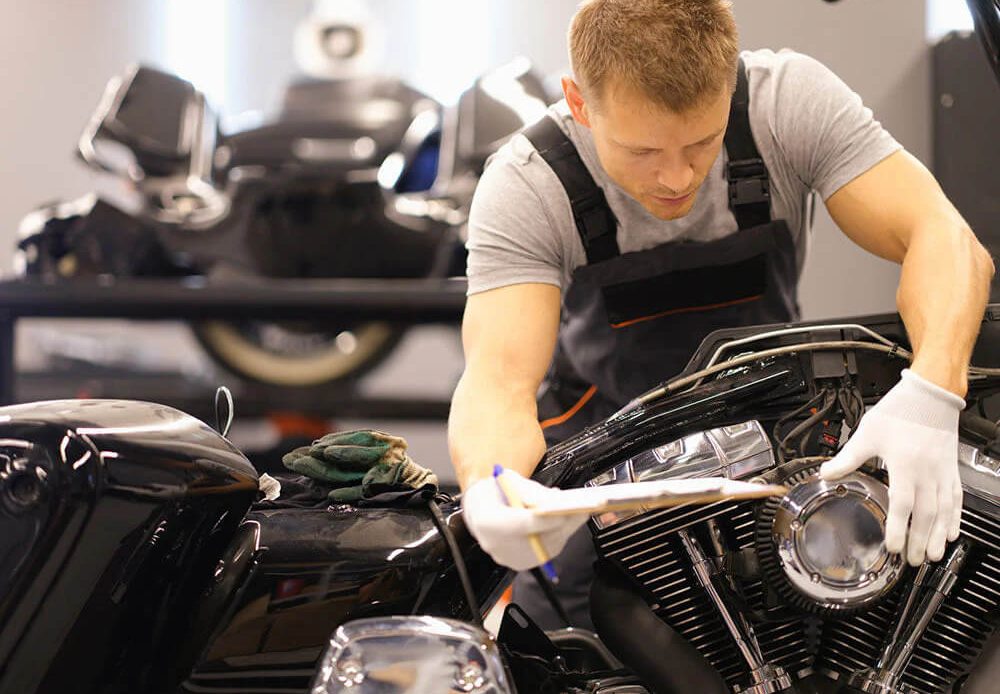
Always inspect the motorcycle in person and in daylight. Bring a friend or someone who knows about bikes if possible. Things to examine include:
Exterior condition:
- Check for dents, scratches, rust, or mismatched paint (which could indicate previous accidents).
- Examine the frame for cracks, welds, or bends.
Mechanical components:
- Look at tire tread and wear pattern (uneven wear may mean alignment problems).
- Test brakes — both front and rear should feel firm.
- Inspect the chain and sprockets for signs of wear or rust.
- Check oil and coolant levels; dirty or low fluids can indicate poor maintenance.
Engine check: Start the motorcycle from cold (not pre-warmed by the seller). Listen for unusual knocking, rattling, or excessive exhaust smoke — all signs of possible engine issues.
Take a Test Ride (If Possible)
A short test ride can reveal things a static inspection can’t. Ask the seller if they’re comfortable with it — some may require cash in hand or to accompany you.
During the ride, pay attention to:
- Throttle response — it should be smooth, not jerky.
- Gear shifting — gears should engage easily without grinding.
- Braking — the motorcycle should stop smoothly without wobbling.
- Handling — it should feel stable at different speeds.
If you’re not experienced enough to test these aspects, consider having a trusted mechanic check the motorcycle for you.
Review the Maintenance Records
A responsible owner will usually have maintenance receipts or a service logbook. Look for:
- Regular oil changes
- Brake service
- Tire replacements
- Chain maintenance
- Any major part replacements
Consistent documentation means the bike has been properly cared for — a good sign that it’ll continue performing well.
Check the Motorcycle’s History
Besides verifying ownership, you’ll want to know the motorcycle’s accident and mileage history. Running a VIN report can tell you if it’s ever been in an accident, salvaged, or had odometer discrepancies.
This can be done through paid services like:
- CycleVIN
- NICB (National Insurance Crime Bureau)
- Carfax for Motorcycles
A clean record adds confidence to your purchase.
Negotiate the Price Fairly
Once you’ve confirmed the bike’s condition, it’s time to negotiate. Use your earlier research to back up your offer.
- Be polite but firm — show the seller comparable listings for leverage.
- Point out any issues discovered during inspection or test ride that justify a lower price.
- Avoid making extremely low offers, as sellers may stop negotiating altogether.
Remember, private sellers often price their bikes slightly above what they expect, so there’s usually room for negotiation.
Handle Payment Safely
When you’re ready to buy, always complete the transaction safely. Tips for payment:
- Meet in a public place (like a bank parking lot).
- Avoid wire transfers or checks from unknown accounts.
- The safest method is cash or bank cashier’s check.
After payment, ensure you receive the signed title and bill of sale. Both parties should sign and date the bill, which serves as proof of ownership transfer.
Transfer the Title and Register the Motorcycle
Each U.S. state has different requirements, but generally, you’ll need to:
- Take the signed title and bill of sale to your local Department of Motor Vehicles (DMV).
- Pay the transfer and registration fees.
- Show proof of insurance before registering (check state requirements).
Don’t delay this step — riding without proper registration or insurance can result in fines or impounding of your motorcycle.
Get Motorcycle Insurance
Before hitting the road, ensure your motorcycle is covered by a suitable insurance policy. Even if your state doesn’t require full coverage, having liability insurance is highly recommended for financial protection.
You can compare quotes online from reputable providers, or consult local insurance agents to find coverage that fits your riding style and budget.
Conclusion
Buying a used motorcycle from a private seller in the USA can be a rewarding experience — both financially and personally — if you take the time to research, inspect, and verify every detail. By checking ownership records, ensuring the bike’s mechanical soundness, and handling payment securely, you’ll minimize risks and maximize value.
A little patience and preparation can help you ride away confidently on a motorcycle that’s safe, reliable, and truly yours.